
Thermal Performance for Working Buildings
Commercial Insulation Services in Sioux Falls for warehouses, offices, and industrial facilities managing energy costs
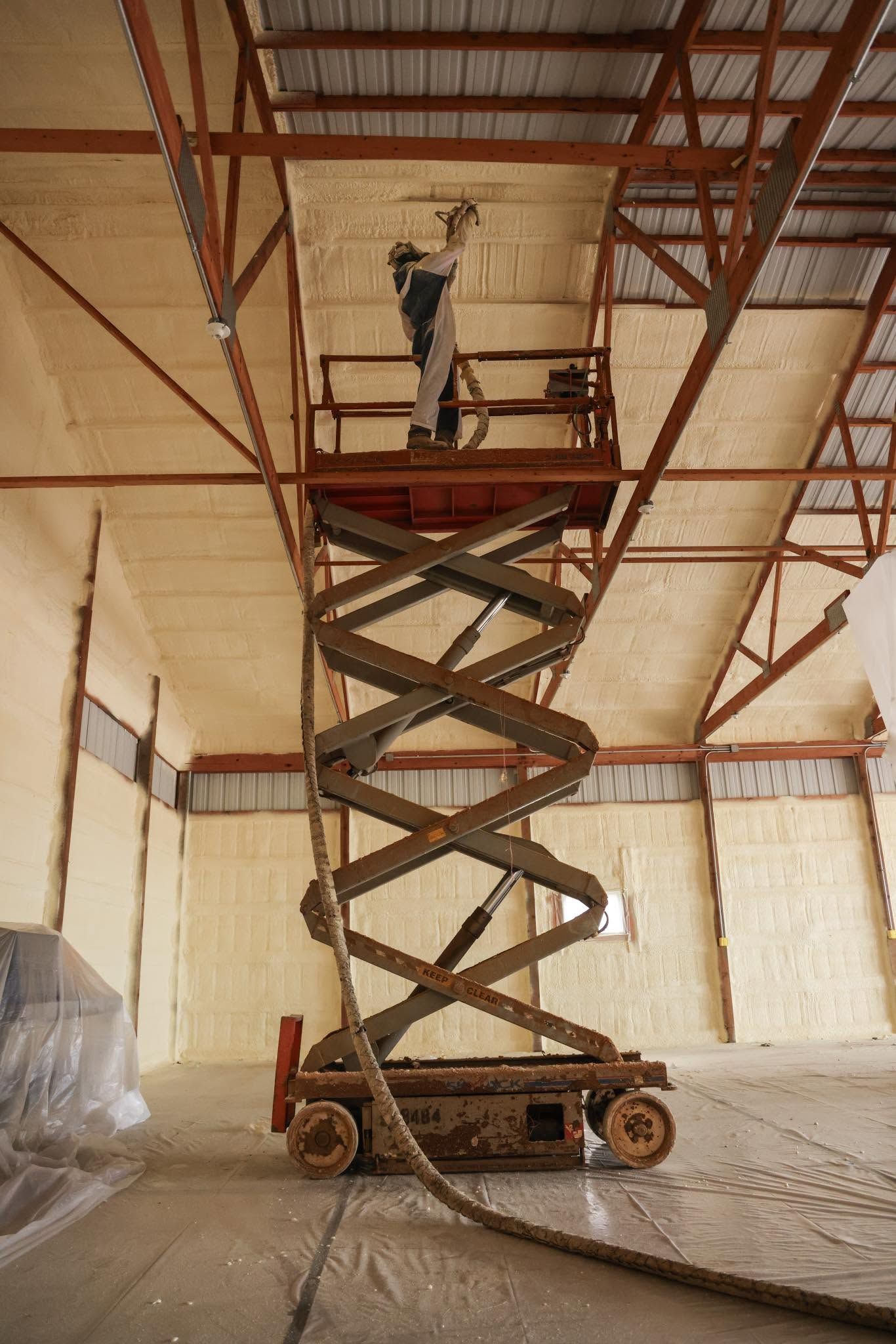
Commercial structures face different insulation challenges than residential buildings—higher ceilings, metal construction, large HVAC loads, and constant occupancy all affect thermal requirements. AB Insulation, LLC installs spray foam, rigid board, and blown-in insulation in commercial buildings throughout Sioux Falls, targeting roof decks, exterior walls, and mechanical spaces where heat loss drives up operating costs. Properly insulated facilities maintain consistent interior temperatures without overworking heating and cooling systems, a critical factor when Sioux Falls winter temperatures regularly fall into single digits and summer heat stresses roof-mounted HVAC units.
The work involves measuring existing R-values, identifying thermal bridges in metal framing or concrete walls, and selecting insulation types that meet fire codes and moisture control requirements for the specific building use. Warehouses with unheated spaces often need different approaches than climate-controlled office environments, and mechanical rooms require insulation that won't degrade from vibration or temperature fluctuations.
Arrange an on-site consultation to evaluate thermal performance gaps and develop an insulation plan specific to your building's construction and use.
How Commercial Insulation Reduces Operating Costs
Installation begins with surface preparation—cleaning metal panels, sealing penetrations, and ensuring substrate compatibility with the chosen insulation material. Spray foam applications require temperature and humidity conditions within manufacturer specifications, which can limit work schedules during extreme weather. Rigid board insulation is mechanically fastened or adhered to masonry and metal surfaces, with seams staggered and taped to eliminate gaps.
After installation, building operators notice reduced runtime on HVAC equipment, fewer temperature complaints from occupants, and lower utility bills during peak heating and cooling months. Metal buildings in particular show dramatic improvement, as uninsulated steel panels conduct heat rapidly and create condensation problems that insulation eliminates. The difference becomes measurable within the first full billing cycle after completion.
This service doesn't include structural repairs or HVAC modifications, though insulation often reveals air leaks or ventilation deficiencies that need separate attention. Buildings with flat or low-slope roofs may benefit more from roof deck insulation combined with reflective coatings than from wall insulation alone, depending on where the majority of heat transfer occurs.
Answers to Frequent Service Questions
Building owners typically want to know how insulation affects occupancy schedules, fire safety compliance, and return on investment before committing to installation.
What type of insulation works best for metal buildings?
Closed-cell spray foam applied directly to metal panels eliminates condensation by creating an air and vapor barrier, while also adding structural rigidity to thin-gauge steel—though rigid board with sealed seams also performs well in applications where spray foam isn't feasible.
How does commercial insulation meet fire code requirements?
Materials are selected based on building occupancy classification and local code, with options including fire-rated spray foam, mineral wool for high-temperature areas, and intumescent coatings where exposed insulation requires additional protection.
When is the best time to insulate an existing commercial building?
Scheduling during low-occupancy periods minimizes disruption, though work in unconditioned spaces like warehouses or above drop ceilings can often proceed without affecting daily operations in Sioux Falls facilities.
What areas of a commercial building benefit most from added insulation?
Roof decks and exterior walls with direct sun exposure typically show the highest heat gain and loss, making them priority areas, followed by spaces adjacent to unconditioned zones like loading docks or storage areas.
How long does it take to insulate a commercial space?
Timeline depends on square footage and insulation type—spray foam applications may require multiple days for curing and ventilation, while blown-in or batt installation in accessible areas can often be completed within a standard work week.
AB Insulation, LLC works with facility managers and building owners to minimize downtime and meet project deadlines. Contact us to review your building's current thermal performance and discuss insulation options that fit your budget and operational needs.